From the mountains of Fujairah to the summits of the world… an Arab dream led by Al‑Maamari
By: Abdulrahim Al‑Arjan
Traveler and researcher in adventure tourism
When an Arab climber raises his country’s flag atop a peak exceeding eight thousand meters, he is not merely carving a path through the snow—he is opening a window of hope for an entire generation that believes the impossible can become possible.
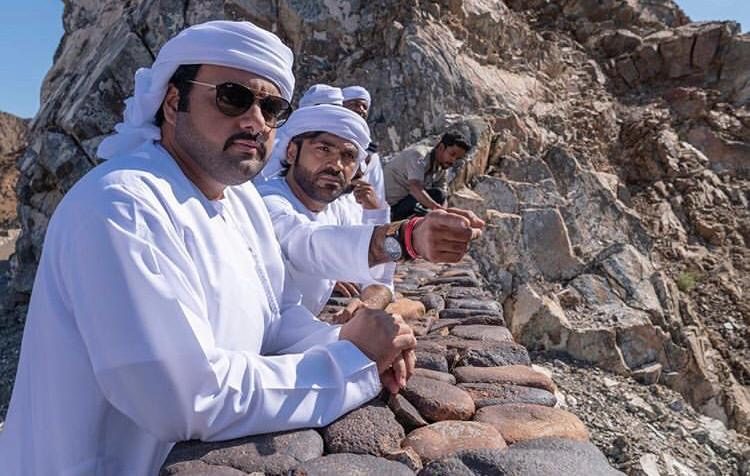
In the mountains of Fujairah, the highlands were never just terrain for Emirati climber Saeed Al‑Maamari; they were a source of inspiration for a man who realized that knowing the path begins with discovering oneself. There, in the Hajar Mountains, he honed his body and spirit, gaining the strength to pursue a great dream that transcends personal ambition to become a national message and an Arab aspiration: to be the first Arab to complete the ascent of all fourteen peaks rising above 8,000 meters. His journey is marked by pioneering achievements, coupled with his support and encouragement of others—because the best kind of success is achieving your dream while helping others achieve theirs.
In a friendly conversation marked by honesty and humility, Al‑Maamari revealed details of his story and noble mission to reach the highest peak in every country in the world, under the banner of “love, peace, and tolerance,” a slogan inspired by the wise vision of the UAE leadership. He raises his country’s flag on various summits and, as of the preparation of this report, has completed the ascent of 136 peaks—an impressive achievement that reflects a broad human and cultural vision before being a physical challenge. It comes after his successful completion of the Seven Summits and reaching both the North and South Poles.
State trust and social responsibility
These achievements earned him the trust of the leadership, and His Highness Sheikh Mohammed bin Hamad Al‑Sharqi, Crown Prince of Fujairah, tasked him with establishing and managing the Fujairah Adventure Center—the first government center in the world professionally specialized in this field. The center organizes and maps hiking and cycling trails, now exceeding fifty certified routes, including ancestral heritage paths revived according to the highest safety standards and international specifications.
Efforts also included rehabilitating ancient water springs to achieve environmental and heritage balance, identifying rock‑climbing and aerial‑sports routes, enhancing the marine environment by protecting coral reefs and establishing a dedicated museum, and creating a recreational sports park to develop skills and initiative for all age groups—even children as young as two.
These projects strengthen Fujairah and the UAE’s position as a safe global destination for adventure tourism and help build a culturally aware, patriotic athletic generation. As the saying goes: “He who walks on its soil loves his country.”
The great dream… the fourteen peaks
After achieving numerous milestones and becoming the first to raise the UAE flag on Everest, the great dream of every climber began to call him: completing the ascent of the fourteen peaks above 8,000 meters, known as the “death zone.”
To date, he has completed the ascent of the six most difficult among them: Everest (8,848 m), K2 (8,611 m), Kangchenjunga (8,586 m), Lhotse (8,516 m), Makalu (8,485 m), and Broad Peak (8,051 m), with a precise plan to complete the remaining peaks.
Al‑Maamari emphasizes that achieving this goal requires exceptional physical and mental preparation, a detailed study of each mountain’s climate and geography, and understanding the required equipment, clothing, permits, insurance, logistics, and safety plans. He values the support and trust of his country in providing the needs and costs of such expeditions.
He adds that companionship comes before the path in such journeys; success is not based on experience alone but on mutual trust, as your life may depend on a decision made by the team leader in a matter of seconds. This is where teamwork and selflessness become essential—mountains do not accept individuality, especially when you are suspended by a rope in winds below –25°C or facing the threat of an avalanche.
In the death zone, above 8,000 meters, thinking slows, and neuromuscular coordination weakens due to low oxygen levels and the body’s reduced ability to produce the energy needed for movement.
He says: “With every step on the mountain, or across a ladder suspended between the edges of a crevasse, I focus on where I place my foot to maintain stability and balance. A small mistake could mean the end, God forbid.”
The mountain’s majesty and respect for nature
Al‑Maamari affirms that some expeditions end with the decision to turn back before reaching the summit—and that this is true courage, because the mountain will remain, but life cannot be replaced.
He recalls an attempt where he had to retreat due to a storm that blocked his way, even though the summit was right before his eyes. He says that respecting nature and the mountain’s majesty is more important than emotional victory; a safe return is half the achievement, because it means you understood the mountain and recognized nature’s laws—if you respect them, they reward you; if you challenge them, they defeat you.
He adds: “I believe the greatest journey a person undertakes is not to the top of the mountain, but into the depths of his own soul.”
He describes the mountain’s solitude as an infinite world of white, offering a chance for reflection, self‑return, sensing the greatness of the Creator, recalling family prayers, national pride, friends’ hopes, and the love of thousands of followers he may have never met.
Mountains and Arab presence
Al‑Maamari says he is proud of every Arab who achieves success in the world of mountaineering and feels that his own success is part of everyone’s success. This is why the Fujairah Adventure Center was established as an open hub for training and qualification, benefiting Emiratis and residents alike—many of whom achieved remarkable accomplishments after training on its routes.
He believes the Arab world has many ambitious individuals who deserve support and care, but we are still at the beginning of the journey compared to countries with long histories in this sport. The path to the summits begins with gradual progress, gaining experience, training under specialists, and raising adventure awareness before attempting major challenges.
He concludes:
“We may raise our nations’ flags atop the summits, but the greatest achievement is raising our nations’ values and ethics everywhere we go.”
Al‑Maamari’s story is not that of a climber seeking a new peak—it is an Arab model proving that investing in people, supporting ambition, and building specialized institutions have shattered stereotypes about adventure sports in the region. The day will come when we see dozens of Arab climbers following his path, turning the dream that began in the mountains of Fujairah into an Arab school that produces heroes carrying their nations’ banners to the highest points on Earth.