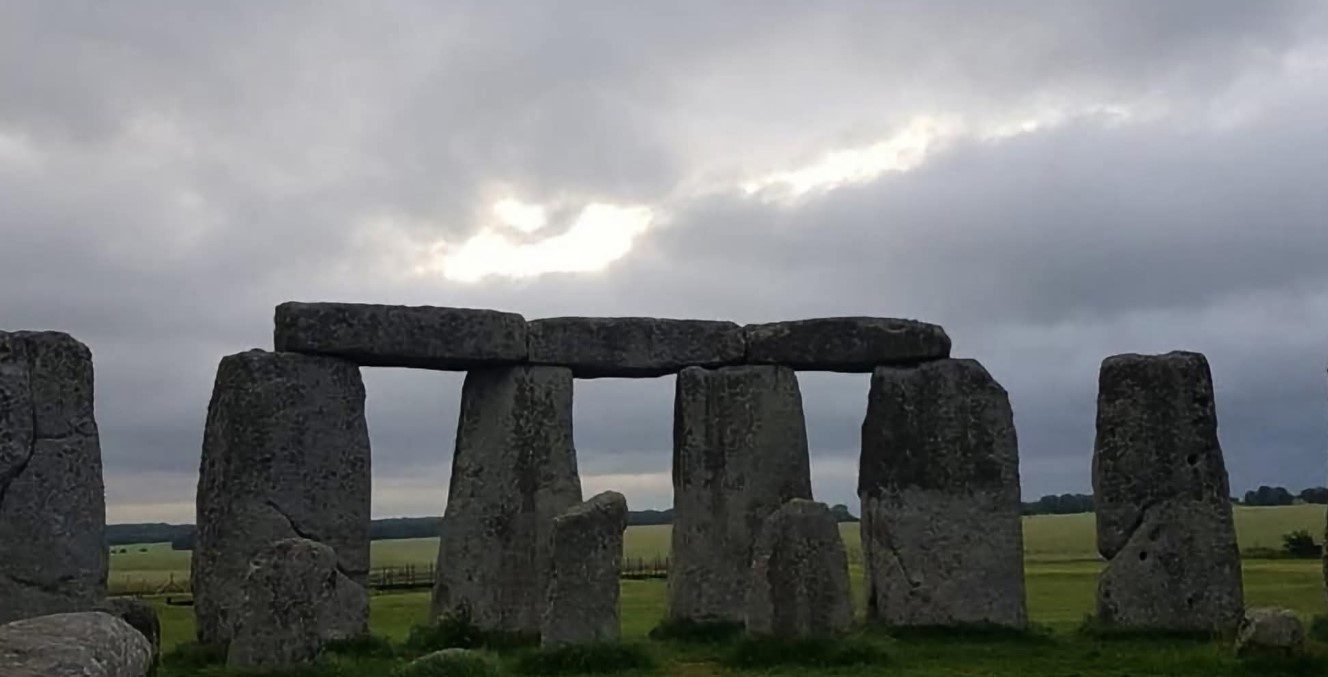
Stonehenge and the Summer Solstice: A Civilizational Mystery That Attracts Thousands Every Year
By: Abdalrahem Alarjan
Adventure Tourism Researcher
When the sun rises at dawn on the day of the summer solstice over the plains of Wiltshire in southern England, time seems to pause for a moment before one of the most mysterious archaeological sites in the world: Stonehenge. On this day, thousands of people from different nationalities and cultures gather to watch the sun rise in alignment with the giant stones that were built more than five thousand years ago, in an event that brings together history, astronomy, spirituality, and human heritage.
The summer solstice is an astronomical event that occurs once each year when the Earth's axial tilt reaches its maximum toward the sun. As a result, it produces the longest day and the shortest night in the Northern Hemisphere. The summer solstice usually falls on June 20 or 21.
For thousands of years, agricultural societies considered this event an important marker in the cycle of life, as it was linked to planting and harvesting seasons. Therefore, it was surrounded by myths, celebrations, and religious rituals across many ancient civilizations.
Stonehenge: A Prehistoric Wonder
Stonehenge is located on Salisbury Plain in southern England and is one of the most famous archaeological sites in the world. The first phase of its construction began around 3000 BCE, and it continued to develop in several stages until approximately 1600 BCE.
The site consists of massive stones, some weighing more than 25 tons. Even more astonishing is that some of these stones were transported from areas hundreds of kilometers away at a time when wheels or advanced transport machinery did not exist.
UNESCO has listed Stonehenge as a World Heritage Site, recognizing it as one of the most significant remaining examples of Neolithic and Bronze Age civilizations. However, it remains one of archaeology’s greatest mysteries. Researchers know that it was built using relatively simple stone and bone tools, but how the massive stones were transported, raised, and precisely arranged remains under study.
Theories suggest that thousands of people participated in its construction over centuries, using wooden sledges, ropes, and earth ramps. Some scientists believe the project required advanced social organization, reflecting leadership and shared beliefs among the communities that built it.
The Relationship Between Stonehenge and the Sun
One of the most fascinating aspects of Stonehenge is its clear connection to the movements of the sun.
At sunrise on the summer solstice, the sun appears above what is known as the “Heel Stone,” and its rays align almost perfectly with the monument’s main axis. During the winter solstice, a nearly reverse phenomenon occurs at sunset.
This precise alignment has led many researchers to believe that the site was used as an astronomical observatory or a seasonal calendar to help ancient communities determine times for agriculture and religious celebrations.
Each year, the annual event attracts tens of thousands of visitors who:
Witness a rare astronomical phenomenon tied to an ancient site
Celebrate the longest day of the year
Explore history and ancient civilizations
Participate in cultural and spiritual rituals
Unlike most days of the year, visitors during the summer solstice celebrations are allowed to approach the stones closely, providing a unique and exceptional experience.
Spiritual Celebrations
Today, Stonehenge is associated with groups known as “modern Druids,” who draw inspiration from ancient traditions. They view the summer solstice as an occasion to celebrate nature and the cycles of life.
However, modern Druids are not a direct continuation of the ancient Druids who lived in Europe over two thousand years ago; rather, they are part of a relatively modern cultural and spiritual movement.
What Was Stonehenge Used For?
There is no final agreement among scientists about the site’s original purpose. The main theories include:
A religious center for rituals and ceremonies
An astronomical observatory for tracking the sun and the moon
A burial site for the dead and commemorative practices
A social gathering place where tribes met during major events
Excavations around the site have uncovered human remains and ancient burial sites, supporting the idea that it served as an important ceremonial and funerary center.
Stonehenge and Dolmens: Is There a Connection?
Stonehenge and the dolmens found in Jordan, the Levant, and Europe belong to what is known as megalithic architecture, meaning structures built from large stones.
These monuments share similarities in that they date back to prehistoric times and reflect advanced engineering and organizational capabilities. However, there is no scientific evidence proving a direct connection between the builders of Stonehenge and those who constructed dolmens in the Middle East.
An Enduring Mystery
Despite centuries of research and the use of modern archaeological techniques, many questions remain unanswered:
Why was Stonehenge built?
How were these massive stones transported?
What was the true meaning of the rituals performed there?
Perhaps this mystery is what continues to give the site its enduring fascination. Each sunrise over its ancient stones reminds us that early humans possessed knowledge and capabilities beyond what we often imagine, and that some secrets of the past still await discovery.
The gathering of thousands each year to witness the sunrise at Stonehenge is not merely a seasonal celebration—it is a meeting between the modern human and one of the greatest mysteries of human civilization, where history, astronomy, faith, and nature converge in a single moment that has repeated itself for thousands of years.