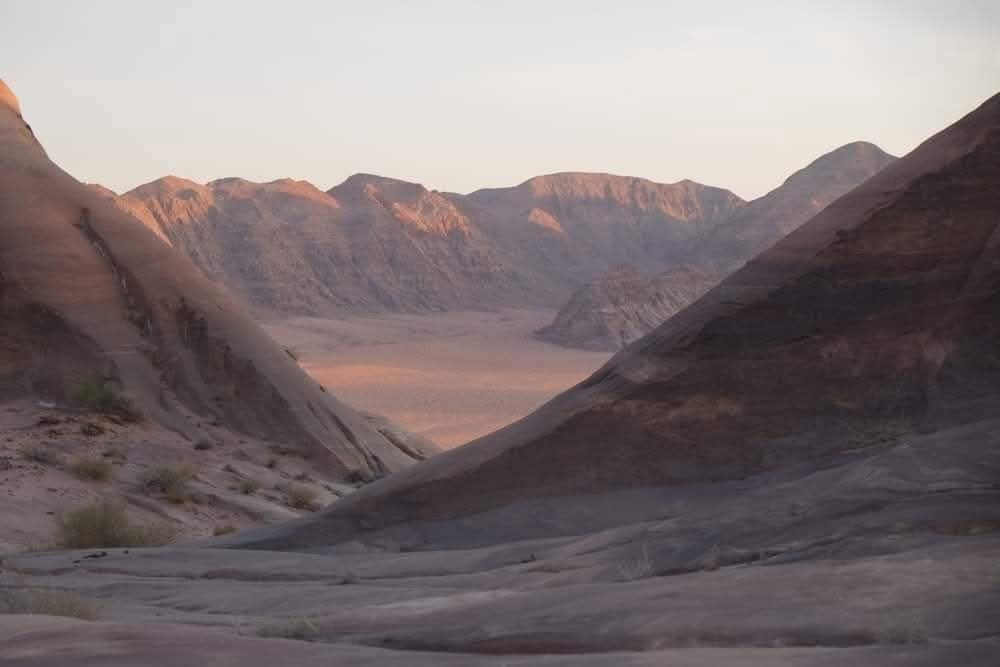
Wadi Rum Reserve Launches 6 New Hiking Trails
By Abdulrahim Al-Arjan
Traveler and Adventure Tourism Researcher
Wadi Rum Reserve has announced the completion of a project to design and launch six new hiking trails within its officially designated boundaries, in a move aimed at enhancing the tourism offering and developing adventure tourism and desert hiking activities, in line with environmental sustainability principles and the empowerment of the local community.
The reserve’s management confirmed that the field planning and design of the trails were carried out بالكامل by the Tourism Department and the surveyor affiliated with the Aqaba Special Economic Zone Authority, as part of a comprehensive project to develop the region’s tourist trail network.
The project is considered a model of efficient resource management, as it was completed entirely using the authority’s own staff and expertise, without placing any additional financial burden on the budget—having been implemented at no extra cost.
The new network includes six diverse trails carefully selected to suit different categories of visitors. Their lengths vary according to the geographical terrain they traverse, while the duration of each hike ranges between four to five hours, making them suitable for daily tourism programs focused on leisure and visits to natural and heritage sites.
The trails vary in difficulty from easy to moderate, combining walking across open desert spaces, rocky sections, and winding natural passages. This provides a rich experience suitable for different fitness levels and age groups.
In selecting and designing the trails, the reserve adopted a set of tourism, archaeological, and environmental criteria to ensure a comprehensive, multi-faceted visitor experience. These criteria include connecting the trails to prominent historical and archaeological sites in the area, such as the Nabataean temple, Al-Shalala area, the Anfash (Al-Ameilah) inscriptions, Al-Wajh site, and the Umm Rashid sunset area. The design also emphasizes visual diversity between sand dunes and the unique rock formations for which Wadi Rum is renowned.
Environmental preservation was also taken into account in the design process by establishing safe and sustainable pathways that minimize ecological impact while ensuring the highest safety standards for visitors.
As part of strengthening partnerships with the local community, the reserve organized an introductory workshop with broad participation from tour guides and enthusiasts of desert hiking and adventure tourism from the local population. The workshop was announced through social media to familiarize participants with the new trails and prepare them to incorporate these routes into future tourism programs.
This initiative comes as part of the reserve’s broader efforts to diversify tourism experiences, extend visitor stays, and reinforce the region’s status as a global destination for nature and adventure tourism—while ensuring sustainable development and involving the local community in benefiting from economic opportunities in the tourism sector.
The area features numerous terrains of high significance, including natural rock bridges—one of which is notable for its rarity due to its location on Jabal Al-Barrah. It is also home to Jordan’s highest mountain, Jabal Umm Al-Dami, where we had the honor of raising the Jubilee flag alongside the Jordanian flag already present there. The mountain overlooks Wadi Sabit and the Hismā region. An astronomical observatory has been established nearby, and many international films have been shot there. It has also served as a retreat for writers to compose poetry and complete literary novels.
Recently, there has been a global trend toward developing this sector by reviving historical routes and pathways that once connected ancient states and kingdoms—routes that had been abandoned after the spread of modern transportation. This trend is accompanied by documenting the story of each place and its heritage and history, strengthening the connection between people and geography, and highlighting the wildlife and unique geological diversity found along these trails.
These elements also help attract visitors within a safe environment supported by clear signage and modern positioning and electronic navigation applications.